One of the first questions I get from new clients is whether their site should be built on WordPress or coded from scratch. Both are valid choices, and the right one depends less on which is 'better' and more on what your business actually needs over the next few years.
What You Get With WordPress
WordPress paired with a page builder like Elementor gets a professional site live faster and at a lower upfront cost. You get access to thousands of plugins for almost any feature, an interface content teams can update without touching code, and a huge community of developers if you ever need help. For most small business sites, brochure sites, and blogs, this is the practical choice.
What You Get With a Custom-Coded Site
A custom build using React, Laravel, or a similar stack gives you full control over performance, architecture, and user experience with no plugin bloat weighing things down. It's the right call when your project involves complex business logic, tight integrations with internal systems, or a user experience that off-the-shelf tools simply can't produce.
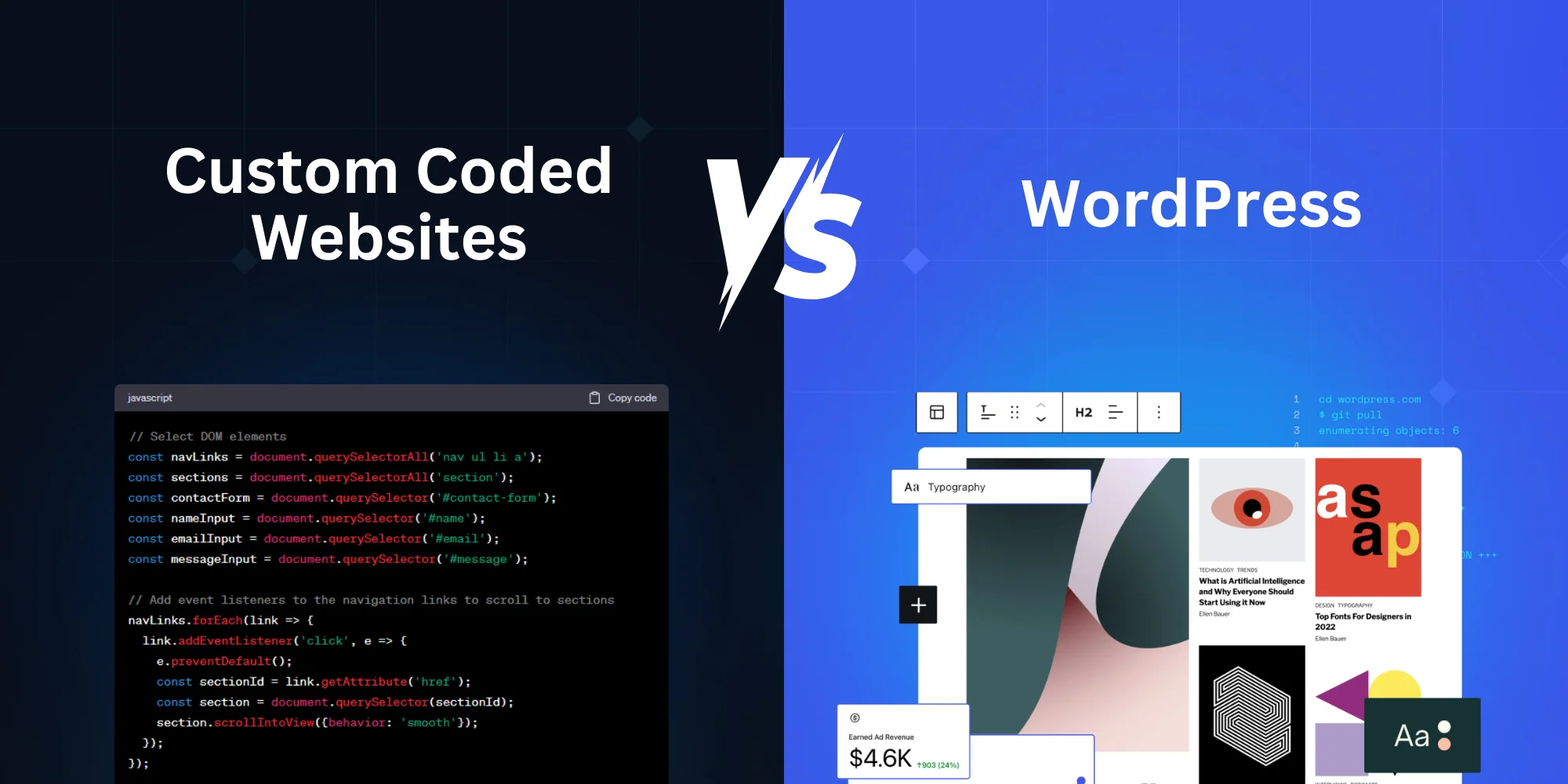
Both paths can produce a great website — the right one depends on your requirements, not just your budget.
Cost and Timeline Differences
WordPress projects are almost always faster and cheaper to launch. A custom build costs more upfront and takes longer, but it avoids the technical debt that comes from stacking plugins on top of each other over time. Neither cost structure is 'wrong' — they just reflect different tradeoffs.
Questions to Ask Before You Decide
- Will non-developers on your team need to publish content regularly?
- Does the project involve custom logic that off-the-shelf plugins can't handle?
- How important is a fast launch versus a fully tailored build?
- Do you have a long-term budget for ongoing custom development?
- Will the site need to integrate deeply with other internal software?
My Recommendation
For the majority of business websites, WordPress with a solid page builder like Elementor is the more practical option. I reserve custom-coded builds for projects with real technical requirements a page builder can't satisfy, like custom dashboards, unique integrations, or apps that need to scale well beyond a typical brochure site.
Frequently Asked Questions
Can I switch from WordPress to a custom build later if I outgrow it?
Yes. Many businesses start on WordPress and migrate specific features, or the entire site, to a custom build once their requirements outgrow what plugins can reasonably handle. Starting on WordPress isn't a dead end.
Is a custom-coded site always faster than WordPress?
Not automatically. A well-optimized WordPress site with a lean plugin stack can outperform a poorly built custom site. Speed comes down to how the site is built, not just which technology it's built with.
Can WordPress handle e-commerce as well as a custom build?
For most stores, yes. WooCommerce on WordPress handles the vast majority of e-commerce use cases well. Custom builds make sense for e-commerce only when you need very specific checkout logic or integrations WooCommerce can't support.
How do I know if my project actually needs custom code?
If you can describe your site's functionality using features that existing plugins already offer, WordPress is almost always the better fit. Custom code becomes worth it when your requirements are genuinely unique to your business.
Conclusion
There's no universal winner between WordPress and custom development. The right choice comes down to your timeline, budget, and how complex your project really is. If you're not sure which fits your situation, walk me through what you're trying to build and I can give you a straight recommendation.